
Motor development
How do you teach your child to cycle?
Learning to cycle is an important step in balance, motor skills and body experience. It is also a complex activity: steering, pedalling, looking, keeping balance and braking happen almost simultaneously.
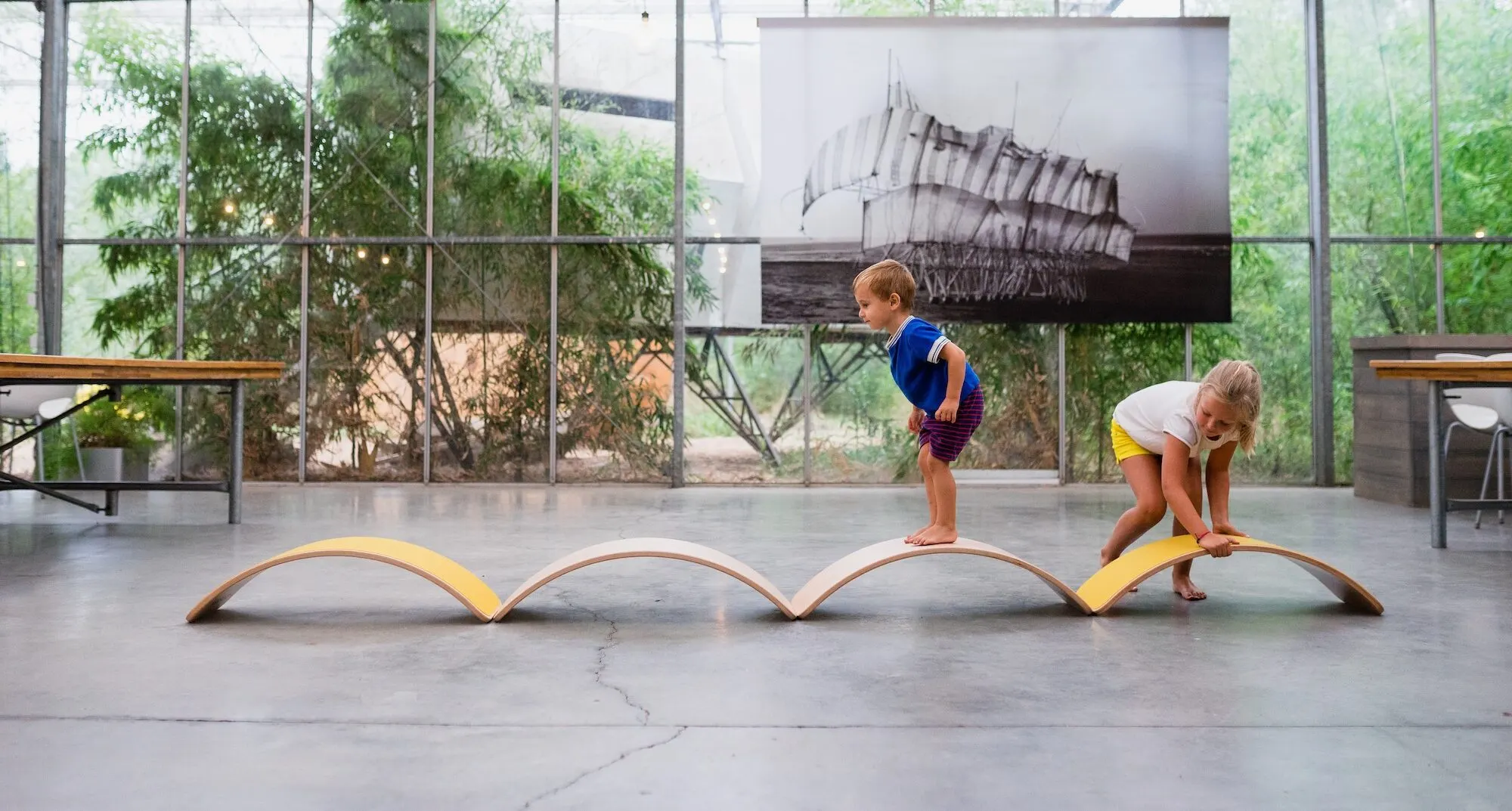
The basic skills
Balance, proprioception and gross motor skills form an important foundation. A child must be able to dose force sufficiently, adopt different postures and coordinate movements. Touch and experience with varied surfaces also contribute to body awareness.
Choose a bike that fits
Start from what your child can already do, not just from age. A tricycle or four-wheeler can be a first step once a child walks independently enough. A balance bike then allows them to discover speed and balance before pedalling is added.
Training wheels provide stability, but teach a different balance pattern. For many children a well-fitting balance bike makes the transition to two wheels more natural.
Practising without pressure
- Make sure both feet can safely touch the ground.
- First practise braking and stopping in a calm, flat place.
- Let your child ride short courses on a balance bike.
- Only add pedals once steering and balance are sufficiently automatic.
- Feel free to take a step back if tension or fatigue builds up.
- Don’t compare: every child learns at their own pace.
When extra help is useful
If balance, strength, coordination or fear keep strongly hindering cycling, an occupational therapist can observe the underlying skills and suggest targeted playful exercises.
This information is general and does not replace personal medical or therapeutic advice.
Shall we get acquainted?
Tell us what you need help with
We listen to your question and explore together whether Lightbulb is the right place. No online booking: you reach us directly.